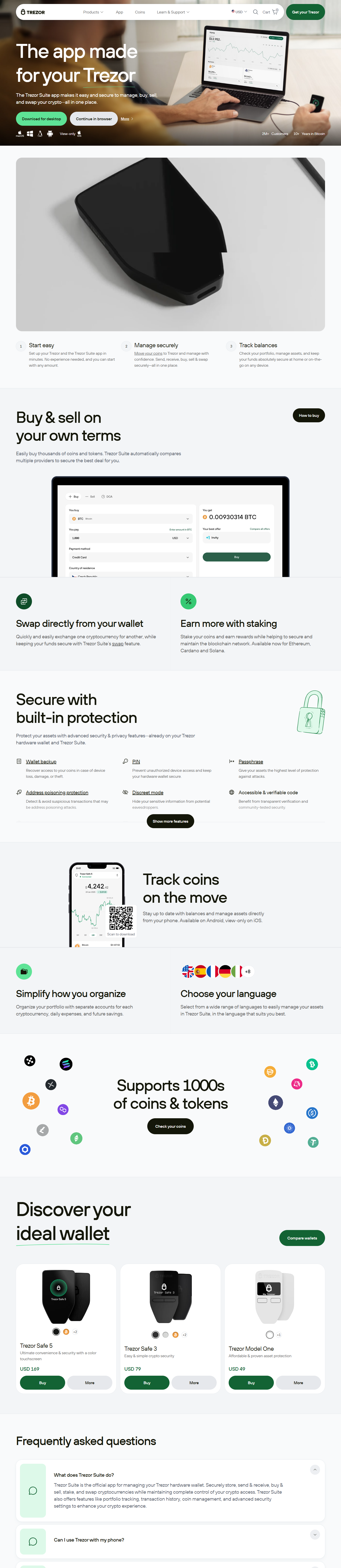
Trézor Suite Guide – Securely Manage Crypto the Right Way
Introduction
Trézor Suite is the official software created to work with Trezor® hardware wallets. Its purpose is simple: help users manage cryptocurrency safely while keeping full ownership of their assets. Instead of trusting online platforms, users rely on their own hardware device to approve every action.
This guide explains Trézor Suite in a clear and practical way. It focuses on safety, correct usage, and long-term protection rather than technical complexity.
Understanding Trézor Suite
Trézor Suite is not a wallet that holds your coins. It does not store private keys, passwords, or recovery phrases. Everything important stays inside the hardware wallet.
The software acts as a secure window. It shows balances, prepares transactions, and connects to blockchain networks—but only the device itself can authorize actions.
Why Trézor Suite Is Important
Many crypto losses happen because private keys are stored online or on insecure devices. Trézor Suite avoids this risk by never touching private keys.
Even if a computer has malware, funds cannot be moved without pressing buttons on the physical device. This extra layer of protection is what makes hardware wallets powerful.
Core Security Principle
Trézor Suite follows one strict rule: the user is always in control.
There are no accounts, no email logins, and no password recovery options. While this means more responsibility for the user, it also removes the risk of third-party interference.
Desktop Version vs Web Version
Trézor Suite can be used in two ways.
The desktop application runs locally on your computer and is recommended for daily use. It offers better stability and avoids browser risks.
The web version allows access without installing software. It is useful when using a trusted temporary device. In both cases, the hardware wallet is required.
Preparing for Setup
Wallet setup should be done carefully and privately. Choose a quiet space and avoid public computers or shared devices.
Have a pen and paper ready. Important information must be written down offline to stay secure.
Connecting the Hardware Wallet
When you connect your Trezor device, Trézor Suite automatically detects it. The software checks whether the device is new or already initialized.
Clear instructions guide you step by step, making the process easy even for first-time users.
Setting a PIN Code
A PIN code protects the device from physical theft. Without the correct PIN, no one can access the wallet.
The PIN is entered directly on the device screen, keeping it hidden from the computer and any malicious software.
Recovery Phrase Explained Simply
During setup, the device creates a recovery phrase. This phrase is the only backup of your wallet.
If the device is lost, damaged, or replaced, the recovery phrase allows you to restore access. If you lose the phrase, the funds are lost permanently.
How to Store the Recovery Phrase Safely
The recovery phrase must stay offline. Write it clearly and store it in a secure place.
Never save it digitally. Never take photos. Never share it with anyone. Anyone who has this phrase owns the wallet.
Creating Crypto Accounts
After setup, you can create accounts for supported cryptocurrencies. Each account is separate and has its own balance and transaction history.
You can rename accounts to organize funds, such as savings, daily spending, or long-term storage.
Viewing Balances and History
Trézor Suite displays balances and transactions in a clean dashboard. You can see confirmations, transaction status, and account activity.
All data comes directly from the blockchain. Nothing is stored or controlled by the software.
Receiving Cryptocurrency
To receive funds, Trézor Suite generates a wallet address. The same address appears on the computer and on the hardware wallet.
Always check that both addresses match before sharing it. This step protects against address-changing malware.
Sending Cryptocurrency Securely
When sending funds, you enter transaction details in Trézor Suite. Before sending, the hardware wallet displays all details for confirmation.
Only after you approve on the device is the transaction sent. This ensures full protection even if the computer is compromised.
Understanding Transaction Fees
Blockchain transactions require network fees. Trézor Suite suggests fees based on current conditions.
You can choose faster confirmations or lower fees depending on your needs. Advanced users can manually adjust fees.
Privacy Features
Trézor Suite includes privacy-focused options such as hiding balances and controlling transaction inputs.
These features help users manage crypto discreetly while maintaining transparency and control.
Supported Cryptocurrencies
The software supports many popular cryptocurrencies and token standards. This allows you to manage multiple assets from one secure interface.
Support grows through updates as new networks gain adoption.
Optional Built-In Services
Some versions of Trézor Suite offer optional tools like crypto exchange or purchase features through third-party providers.
These services are optional. All actions still require confirmation on the hardware wallet.
Keeping Everything Updated
Updates improve security and compatibility. You should keep both the Trézor Suite software and device firmware updated.
Only install updates from official sources to avoid fake software.
Common Beginner Mistakes
Many losses happen due to rushing setup, skipping address checks, or storing recovery phrases digitally.
Slow down, double-check details, and follow security guidelines carefully.
Who Should Use Trézor Suite
Trézor Suite is ideal for beginners, long-term holders, and experienced crypto users who value independence.
It is especially useful for users moving away from centralized exchanges.
Long-Term Security Habits
Using a hardware wallet is an ongoing responsibility. Regular updates, careful verification, and secure storage habits are essential.
Trézor Suite supports these habits with a clear and guided interface.
Final Thoughts
Trézor Suite provides a secure, reliable way to manage cryptocurrency using a hardware wallet. By keeping private keys offline and requiring physical confirmation, it greatly reduces online risks.